Down to Bare Metal
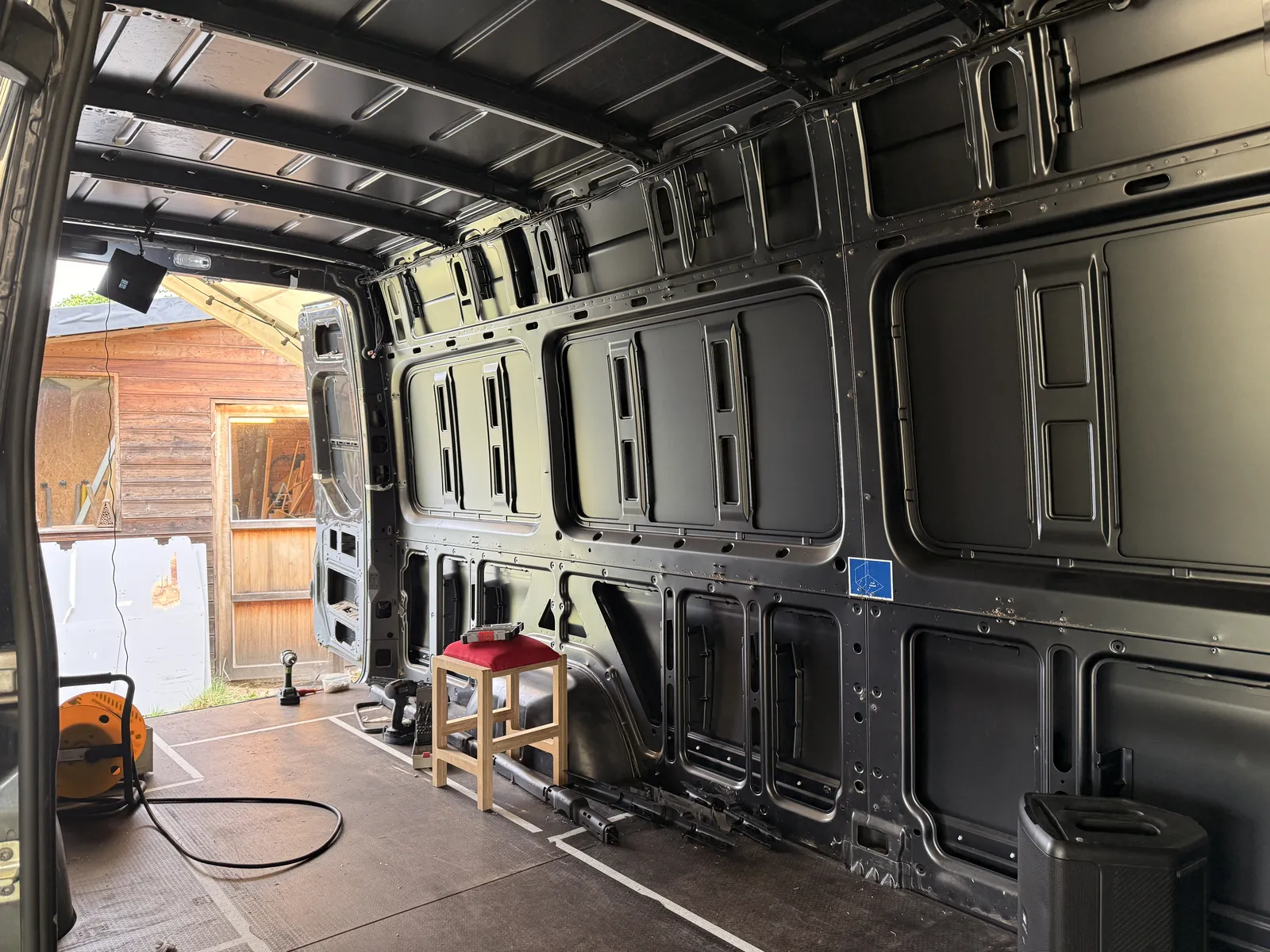
The lining came out in a morning of drilling. Getting rid of what it left behind took the rest of the day.
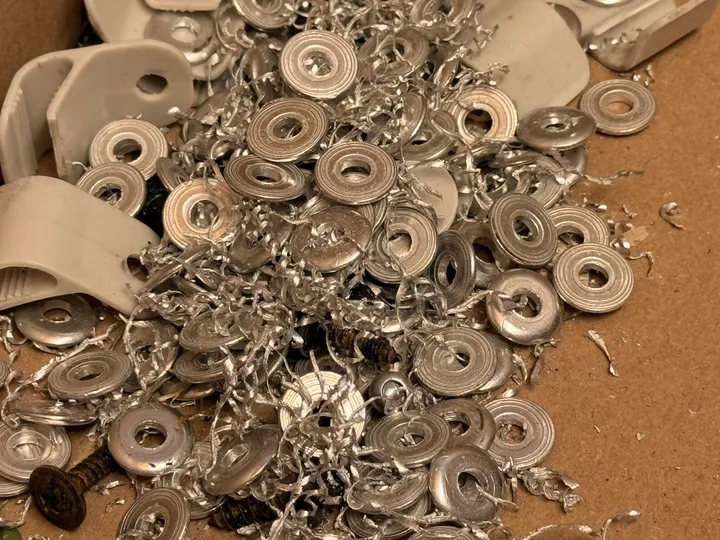
By the evening there was a heap of aluminium rivets on a sheet of cardboard. Hundreds of them, next to curls of metal shavings, screws and white plastic clips. That pile is what a full day of stripping actually looks like.
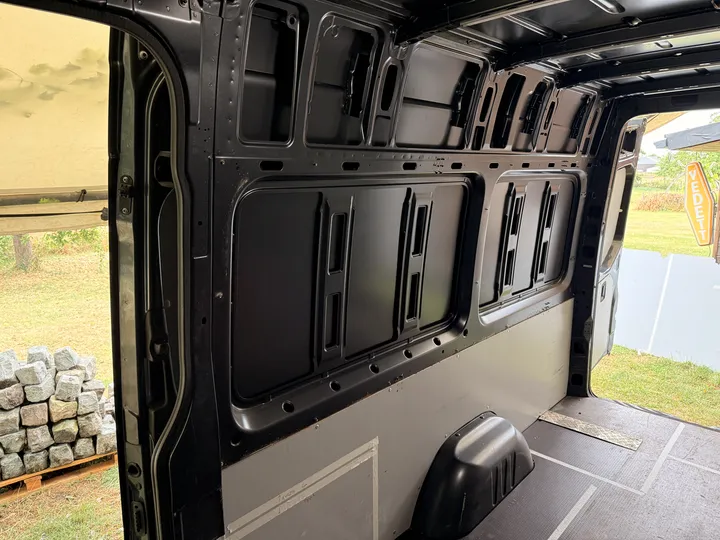
It started with the walls still wearing their light grey factory lining. Some of it unscrews. Most of it does not. The lining is riveted to the body, and there is no trick for that: you drill out every single rivet, one at a time, and there are hundreds of them. Position the bit, catch the head, move on. It took a lot longer than I had allowed for.
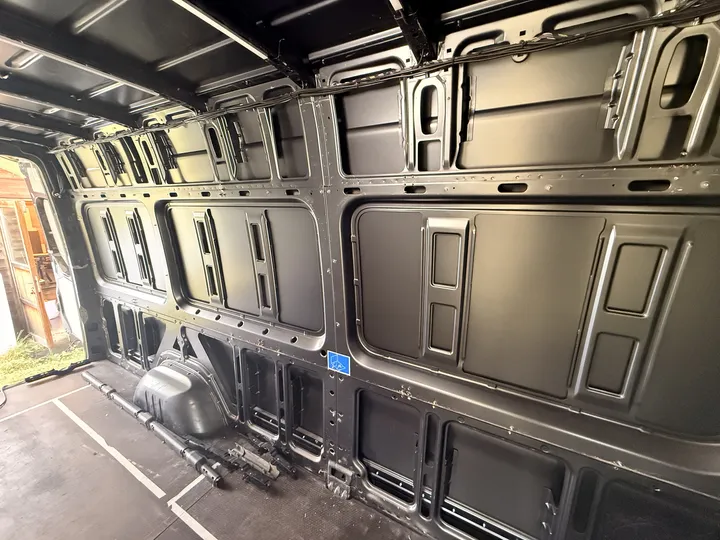
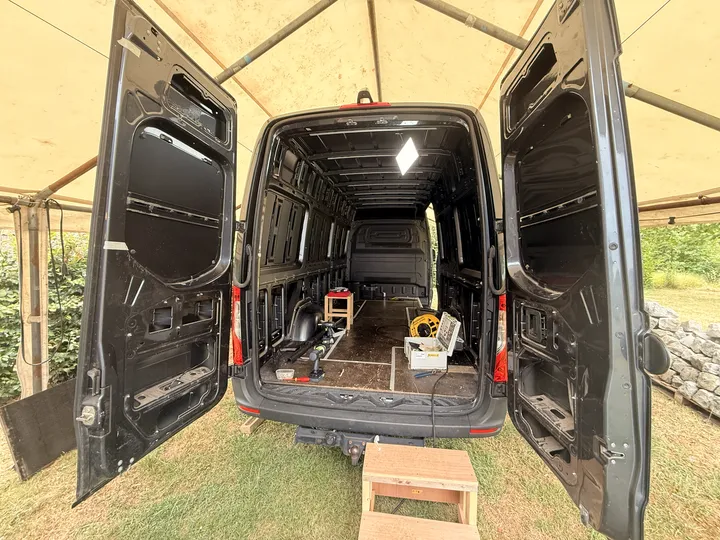
One side came down first, back to dark grey body metal and ribs, with the rails and brackets that held everything landing on the floor. The second side went slower. Its lower panel still had masking tape lines on it and “kussen” written across it in red marker, left from taping out the layout. Those notes came off with the panel. By early afternoon the load area was bare metal from front to back.
That felt like the finish. It was not.
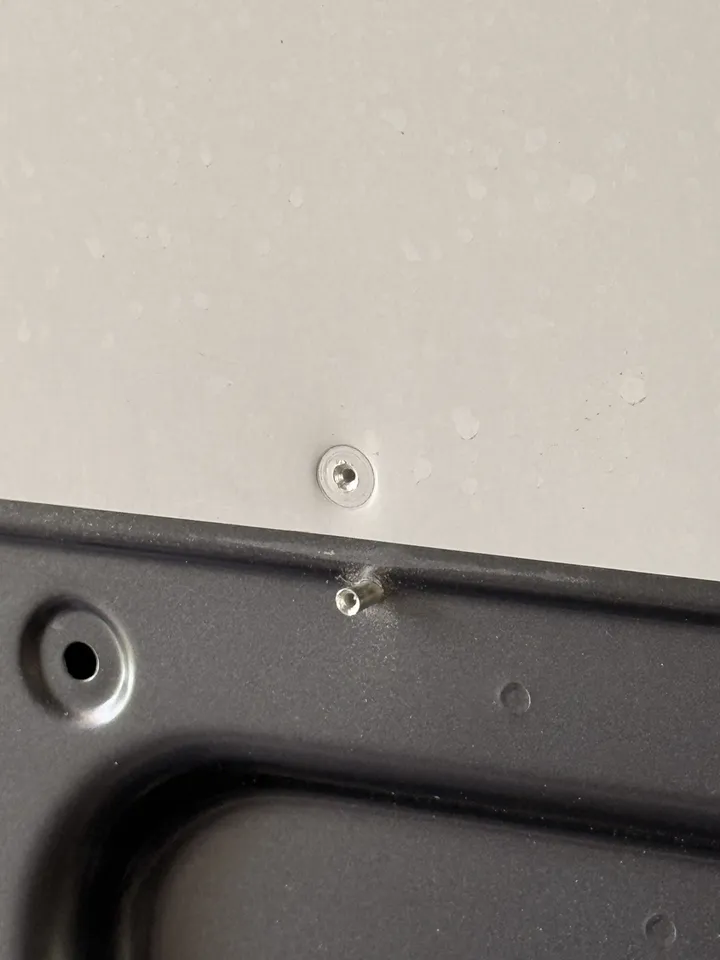
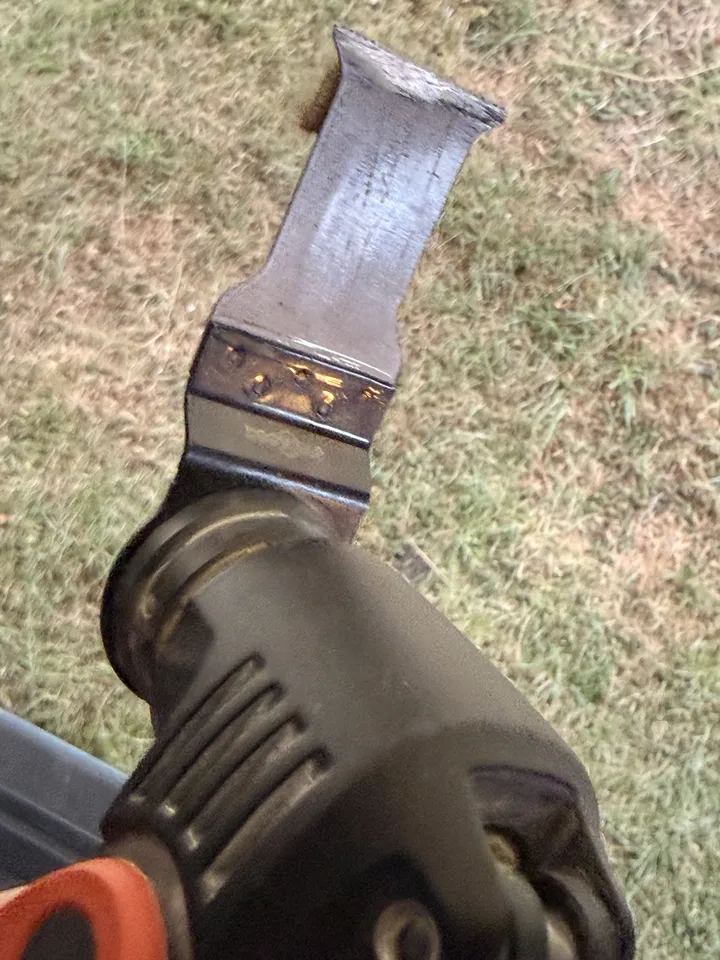
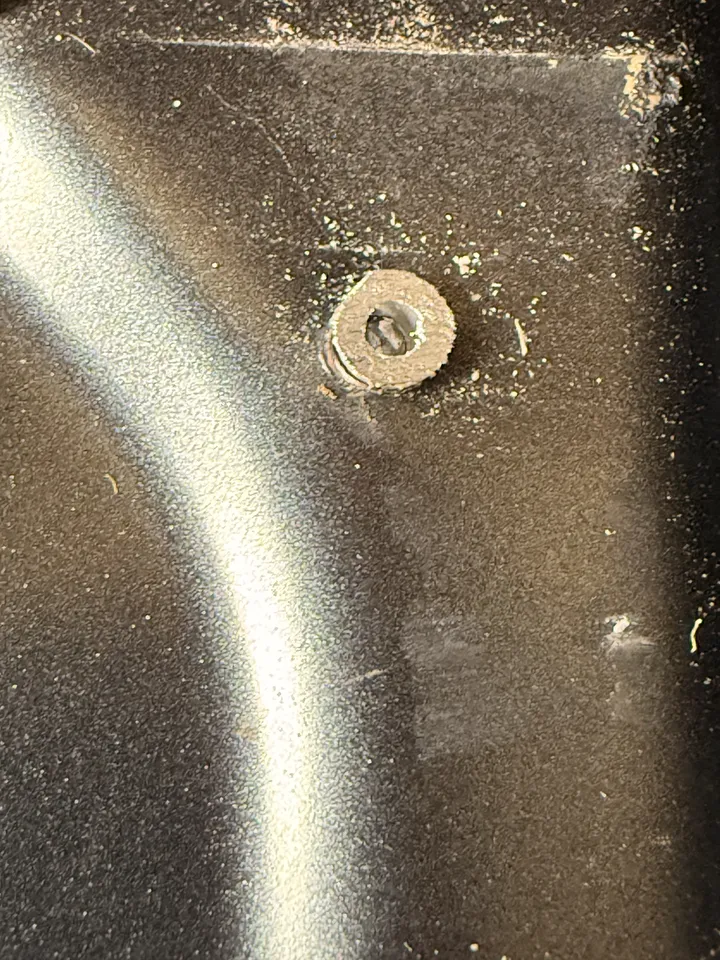
Taking a panel off does not take everything with it. Fasteners stay behind, metal sleeves standing proud of the body, exactly at the height where they catch on anything you slide past them. Those came off one at a time with an oscillating multi-tool, ground down nearly flush with the panel.
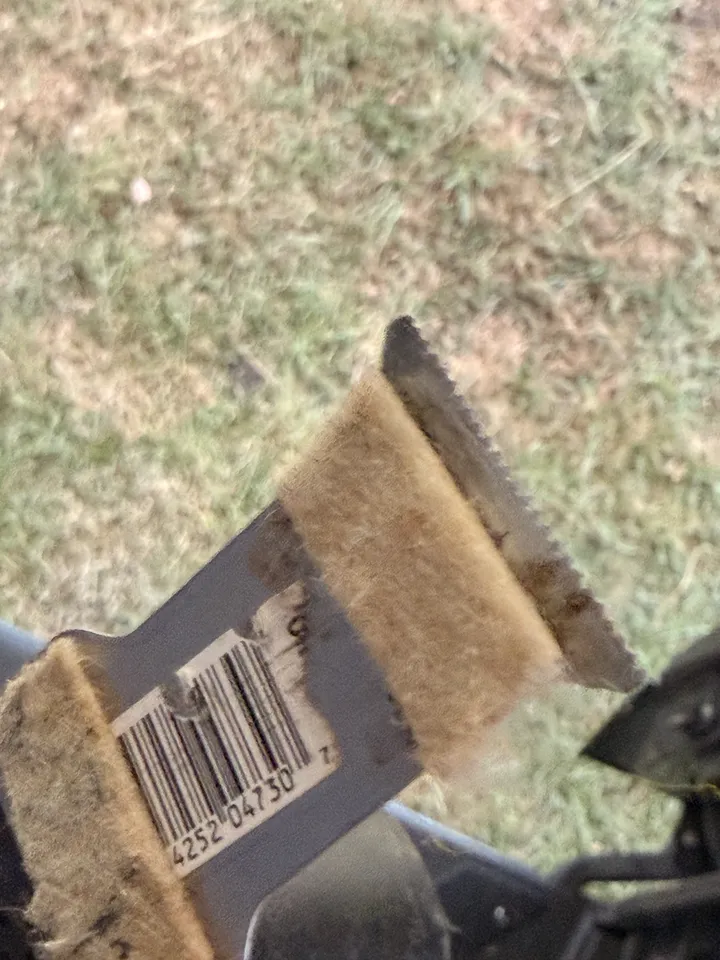
The blades took the damage. One came out worn down to almost nothing. Another finished the day with beige felt packed solid into its teeth.
What I take from this step: the rivets are the job. Not the panels, not the tools, the rivets. And the strip is not finished when the lining is out, because everything the lining was held on with is still in the metal and has to go too.
Next up: the metal does not stay bare for long. Sprayed cork is the plan.
Photos from this weekend